Japanese Card Sleeves vs. Standard: Which Should You Use?
|

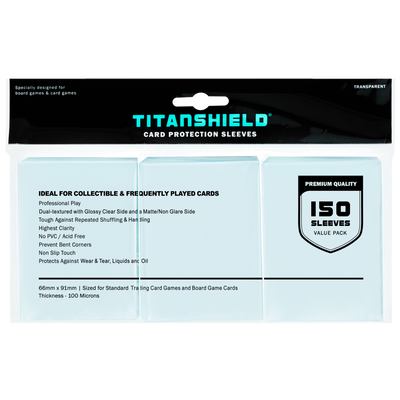


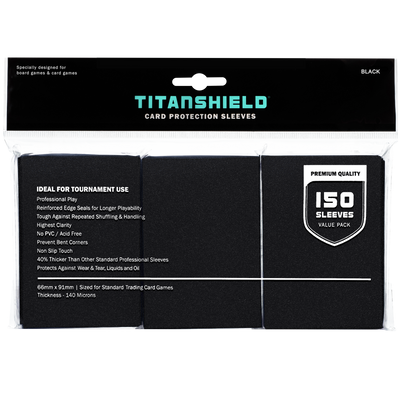








Are Japanese sleeves better? Or just different?
If you've ever stood in an aisle (or scrolled a page) trying to choose between Japanese size card sleeves and standard sleeves, the confusion usually comes from the names themselves.
"Japanese" and "standard" don't describe quality or country of manufacture. They're simply about dimensions. And those few millimeters change shuffle feel, deck thickness, and how well your cards fit in boxes and binders.
In this guide, you'll get a no-nonsense breakdown of sizes, the games that use each format, and practical tips so you can protect your collection, keep cards in mint condition, and pick the sleeves that are ideal for your deck.

Before you sleeve up your deck, you need to know one critical distinction: Japanese versus standard sizing. Pick the wrong size and you'll end up with cards swimming in oversized sleeves or sleeves that simply don’t fit your cards at all.
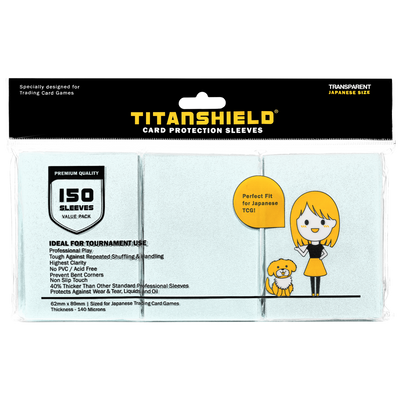
These sleeves are designed for smaller cards like Yu-Gi‑Oh! and Cardfight!! Vanguard, where a tighter overall footprint keeps the card centered in the sleeve, reduces side-to-side movement, and helps maintain clean edges during shuffling and storage.
This is the size most Western TCGs use, such as Magic: The Gathering, Pokémon, Flesh and Blood, and One Piece.
A few millimeters sounds trivial, but it affects everything:
While both sleeve types protect cards, their dimensions create noticeable differences in handling and storage.
Here's a quick side‑by‑side you can scan before you buy:
| Feature | Japanese size card sleeves | Standard size sleeves |
|---|---|---|
| Typical card size | 59 × 86 mm | 63 × 88 mm |
| Common games | Yu-Gi-Oh!, Vanguard, Buddyfight | Magic, Pokémon, One Piece, Flesh and Blood, Lorcana |
| Deck thickness (same count) | Shorter stack | Taller stack |
| Ideal use | Games with 59 × 86 mm cards | Most Western TCGs |
Knowing which games use which sleeve size saves you from buying the wrong product. Here's the breakdown by format.
The size difference reflects regional market standards rather than documented design philosophy:
If you're building collections across these titles, standard sleeves and storage will give you the broadest compatibility.
Here's how to match your cards to the right sleeves and avoid the most common pitfalls.
If you don't have calipers handy, a quick search (or the set's rulebook) will confirm whether you need Japanese size or standard. Or use our quick guide to finding the correct sleeve size using BoardGameGeek.
The biggest one? Thinking Pokémon uses Japanese size card sleeves because the IP is Japanese. It doesn't; Pokémon is standard size. Another common error is ordering standard perfect fits for Yu-Gi-Oh! cards, which results in loose, ballooning sleeves.
Use a perfect fit (top- or side-loader) first, then a matte or glossy outer. For long events, matte outers provide better shuffle grip and hide micro-scratches. Glossy outers showcase foil cards beautifully but show wear faster.
Find more tips on how to double sleeve here.
Most binders and deck boxes list capacity based on standard-sized cards. Japanese-sized decks are more compact, so you can often fit slightly more cards per slot, but avoid overpacking. Excessive pressure can curl foils and damage card edges.
Japanese card sleeves aren’t better; they’re designed for smaller cards. Standard sleeves aren’t worse; they’re simply the format used by most Western card games. The right choice starts with matching the sleeve size to the card size, then narrowing things down based on shuffle feel, finish, and how you store your decks.
If you play Yu-Gi-Oh!, Cardfight!! Vanguard, or Buddyfight, Japanese size card sleeves provide a cleaner fit and a more compact deck. If you play Magic: The Gathering, Pokémon, One Piece, Disney Lorcana, or Flesh and Blood, standard sleeves are the correct size and work best with widely available deck boxes and binders.
Once size is settled, personal preference can take over. Matte finishes tend to offer more consistent handling and hide surface scuffs, while glossy sleeves highlight artwork and foil effects.
Ready to upgrade your setup? Check TitanShield's lineup of Japanese size and standard size sleeves to protect your collection, add longevity, and make shuffling easy without sacrificing precision.
No. Pokémon cards are standard size, and Japanese size sleeves are simply too small to fit them. Use standard size inner sleeves and standard outer sleeves for proper fit and protection.
Usually the opposite. With smaller cards, decks are thinner and often feel snappier to riffle.
Texture matters more:
Not inherently. Price depends on brand, print, and finish (plain vs. artwork). Sometimes, small‑format runs are a touch pricier due to lower volumes, but in most cases, Japanese size and standard sleeves fall within the same price range.
At TitanShield, we price Japanese and standard sleeves the same—no upcharge for the smaller format.
Penny sleeves will fit both Yu-Gi-Oh! and Pokémon cards. Their size (67 × 94 mm) is about 1 mm wider and 3 mm taller than standard sleeves, which results in a loose fit. Because they are very thin and allow cards to slide around, penny sleeves are generally not used for tournament play or regular gameplay. They are best suited for storage and basic protection, especially for bulk cards or when placing cards into top loaders.
Join TitanShield's Rewards Program:
Track your rewards easily and redeem them whenever you're ready. Earn 100 points for signing up.