Inner Sleeves Explained: The Secret to Double Sleeving Like a Pro
|









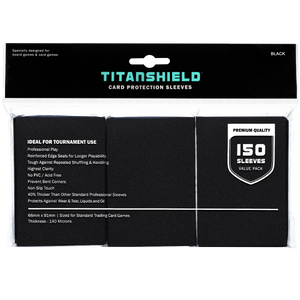


If you care about keeping your collectible cards in top shape, inner sleeves are one of the easiest upgrades you can make. They fit the card snugly, add a dependable barrier against dust and grime, and keep edges from wearing down during play.
Pair them with a standard outer sleeve and you get double sleeving — pro-level protection without making your deck feel thick or awkward.
In this guide, you’ll see how inner sleeves work, how to choose the right fit and film type, the technique for loading cards cleanly, and the common mistakes that cause sleeves to stick, split, or feel bulky.
Also called inner card sleeves or perfect-fit sleeves, inner sleeves are ultra-thin, form-fitting sleeves designed specifically to fit inside regular card sleeves. They provide a snug fit around the card with minimal extra plastic or air. They're generally made from clear, durable polypropylene and are sized for standard cards (Magic: The Gathering, Pokémon, and most board games) or for slightly smaller formats like Yu-Gi-Oh!.
Unlike penny sleeves, which are looser and typically used for sorting or basic protection, inner sleeves are made to fit smoothly inside an outer sleeve without bunching. They help keep out dust and dirt and reduce friction on the card surface. If you've ever re-sleeved old cards and noticed fine scratches or tiny marks from years of play, you'll see why a snug inner layer makes such a difference.
For most players and collectors, inner sleeves are the go-to first layer. They're thin but sturdy and add protection without making your deck too thick.
Think of inner sleeves as the "clean room" for your card. They:
When you double sleeve, the inner sleeve hugs the card, and the outer sleeve takes the hits. That two-layer setup helps spread impact, limit bending, and make it less likely that dirt, dust, or sleeve ink transfer will ever reach the card.
If you use side-load perfect-fit sleeves, the opening faces the side, then you seal everything with a top-load outer sleeve. Fewer gaps means fewer contaminants finding a way in.
Put simply, inner sleeves fit inside, while outer sleeves face the world.
You can play with just outer sleeves, but if you want additional protection, double sleeving is the way to go. The outer sleeve absorbs everyday wear, table grit, and general play, while the inner sleeve keeps the card surface and edges safe.
That's why pro players and serious collectors prefer to double sleeve expensive cards, judge promos, and any card they plan to sell later.
Polypropylene (PP) is the standard for inner sleeves because it’s archival-safe, acid-free, and completely free of PVC.
With no plasticizers in the film, you don’t get that oily residue or slow material “migration” that can damage card surfaces over time. PP also maintains its clarity, so your cards stay visible and crisp instead of hazy or yellowed.
Most inner sleeves fall in the 40–60 μm range, thin enough to slide easily into an outer sleeve but still sturdy enough to resist tearing when cards are handled or double-sleeved. Even an ultra-thin film needs enough strength to hold up to repeated shuffling and insertion without splitting at the seams.
Cut quality also plays a key role. Clean, smooth edges help the card glide in without catching on corners, while burrs or rough cuts can snag sleeves, create whitening, and shorten the life of the sleeve. High-quality cuts equal fewer split corners and a cleaner finish inside your deck.
You want an inner sleeve that fits perfectly and doesn't feel tight to the point of risk. Here's what to look for.
Important: Most brands do not produce inner sleeves for unusual, square, or oversized card formats. Inner sleeves require extremely tight manufacturing tolerances, and the low demand for niche sizes makes production uncommon. If a game uses custom or extra-large cards, you’ll usually have to skip inner sleeves and go straight to outer sleeves or premium protectors.
Inner sleeves should feel snug, not tight. A good fit lets the card slide in smoothly without resistance. Pushing a card into an overly tight sleeve — or squeezing the sleeve to make it fit — can scrape edges, create whitening, or introduce micro-bends that show up during play or grading.
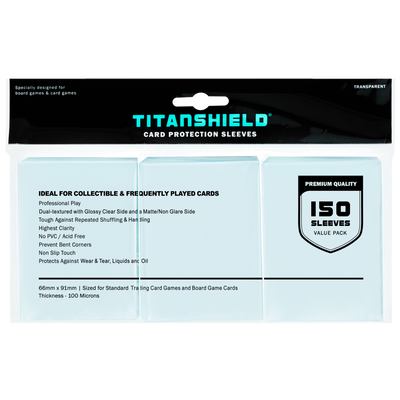
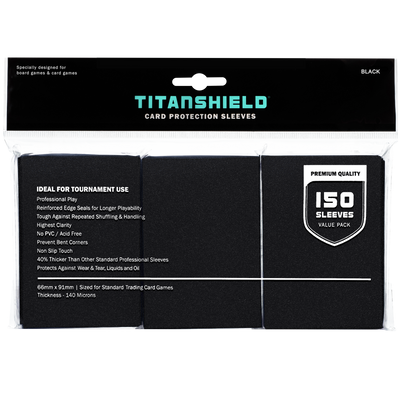
TitanShield offers two additional variants worth considering:
You can explore all TitanShield inner sleeve options here: https://www.titanshield.com/collections/inner-sleeves.
| Spec group | Key points |
|---|---|
| Size and game fit |
• Standard (63 × 88 mm) for MTG, Pokémon, Lorcana, most TCGs • Japanese / small (59 × 86 mm) for Yu-Gi-Oh! and Vanguard • Inner sleeves rarely exist for unusual or oversized cards |
| Proper fit |
• Should feel snug, not tight • Card should slide in smoothly • Forcing sleeves risks whitening and micro-bends |
| Load style |
• Top-load: Fast, familiar, great for large decks • Side-load: Opening on long edge; good dust control (not offered by TitanShield) • TitanShield 360° sealable sleeves: Fully enclosed design for maximum protection • TitanShield smoked inner sleeves: Same function as clear inners, but with an opaque back for tournament-ready decks |
| Film quality |
• Crystal-clear film • Smooth edges • No waviness or inconsistent stretch |
| Fit tolerance and compatibility |
• Inner sleeves behave differently with various outer sleeves • Humidity affects tightness • Double sleeving increases deck thickness • Some combinations can stick — choose known compatible pairs |
At TitanShield, our perfect-fit inner sleeves are made for a consistent, snug fit that won’t stick inside your outer sleeves. They’re cut to slide cleanly without that edge “crunch” you sometimes feel with lower-quality film. We refine sizing to pair smoothly with TitanShield outer sleeves, so you can double sleeve confidently.
If you’re using outer sleeves from another brand, check the listed inner and outer dimensions to make sure the fit stays smooth.
When comparing inner sleeves overall, look for clear size labeling, strong yet flexible film, and dependable stock availability. Lower-quality cuts can feel flimsy, tear at the corners, or bunch inside an outer sleeve. A good test is whether the card slides in easily and sits flat.

Double sleeving isn't hard, but technique matters. Here's a quick, pro-level workflow you can repeat for all the cards in your collection.
Wash and dry your hands. Wipe the table to remove dust or debris. Lay out inner sleeves, outer sleeves, and a small discard pile for any sleeves with factory defects.
Hold the card by opposite edges and guide it gently into the inner sleeve. Set the opening in the direction you want before sliding the card in, so it lines up correctly when you add the outer sleeve.
If the card doesn’t slide smoothly, back out and check the sleeve edge rather than forcing it. Any pressure can mark corners or cause whitening.
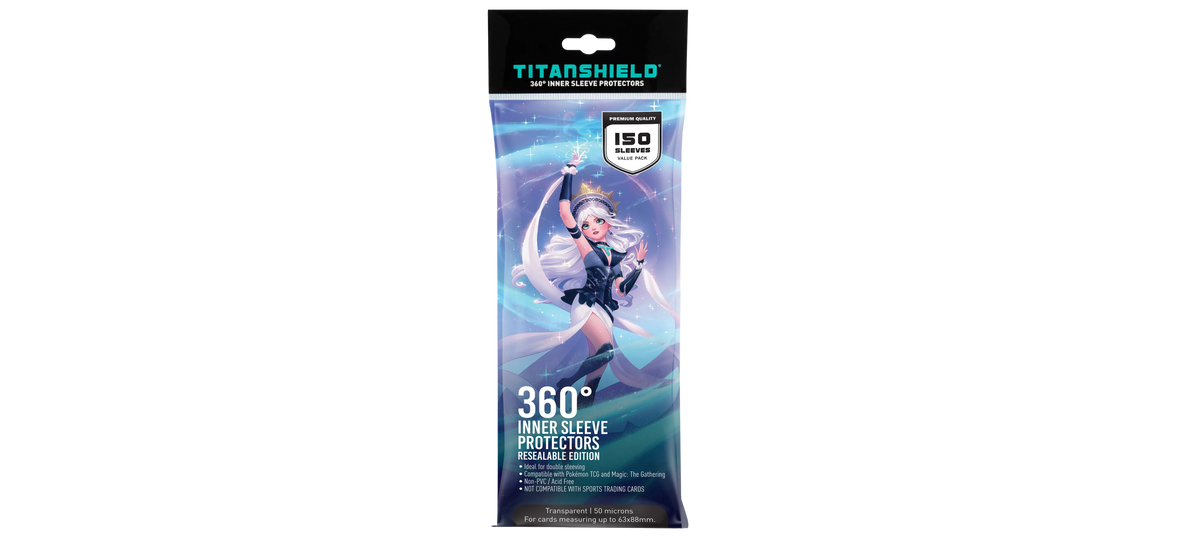
For 360° inners from TitanShield, load the card and seal the sleeve completely. That way, the card is already covered on all sides before you place it into the outer sleeve.
Insert the inner-sleeved card into the outer sleeve so the openings face opposite directions. This reduces pathways for dust and moisture.
With TitanShield 360° inners, orientation doesn’t affect protection since the card is fully sealed.
Let the card slide naturally into place and avoid pinching the surface, since pressure can leave marks. If the sleeves bunch or the card won’t slide, they may not be compatible in thickness. Try another outer sleeve or a slightly thinner inner.
The stack should feel consistent, not thicker on one side and not tight enough to bow the card. Shuffle a small test stack to confirm the sleeves don't stick.
Pro tip: If you plan to sell a card later, double sleeve immediately after you open the pack. That's your best chance to keep it near-mint and avoid micro-scratches from day one.
Use inner sleeves anytime you want an extra layer of protection that preserves condition through play, storage, or transport. They’re especially helpful for:
For binder storage, many collectors still prefer a perfect-fit inner sleeve before the card goes into a pocket page. It keeps the surface clean as you slide cards in and out.
A few small missteps can damage cards without you noticing at first. Here’s what to watch for:
| Do | Don’t |
|---|---|
| Use proper TCG inner sleeves for Pokémon, Magic, Lorcana, etc. | Don’t use penny sleeves as inner sleeves. They bunch and stick. |
| Check that inner and outer sleeve sizes match. | Don’t mix standard inners with small-format outers (or vice versa). |
| Inspect sleeves and discard any with curled, nicked, or miscut edges. | Don’t force cards into damaged or miscut sleeves. |
| Load cards gently and let them slide in naturally. | Don’t use inner sleeves for sports cards. They’re too thick for the format. |
| Keep your workspace and hands clean before sleeving. | Don’t sleeve in dusty environments, where debris causes micro-scratches. |
| Re-sleeve slowly, supporting the card by the edges. | Don’t bend or flex the card when removing it from a tight sleeve. |
| Set aside time for careful double-sleeving. | Don’t rush the process. Haste leads to whitening and corner damage. |
Even good sleeves can run into problems depending on fit, film, and environment. Here’s what goes wrong — and how to fix it fast:
Inner sleeves add protection, but they’re not always the right choice. Skip them in situations where they create more problems than they solve:
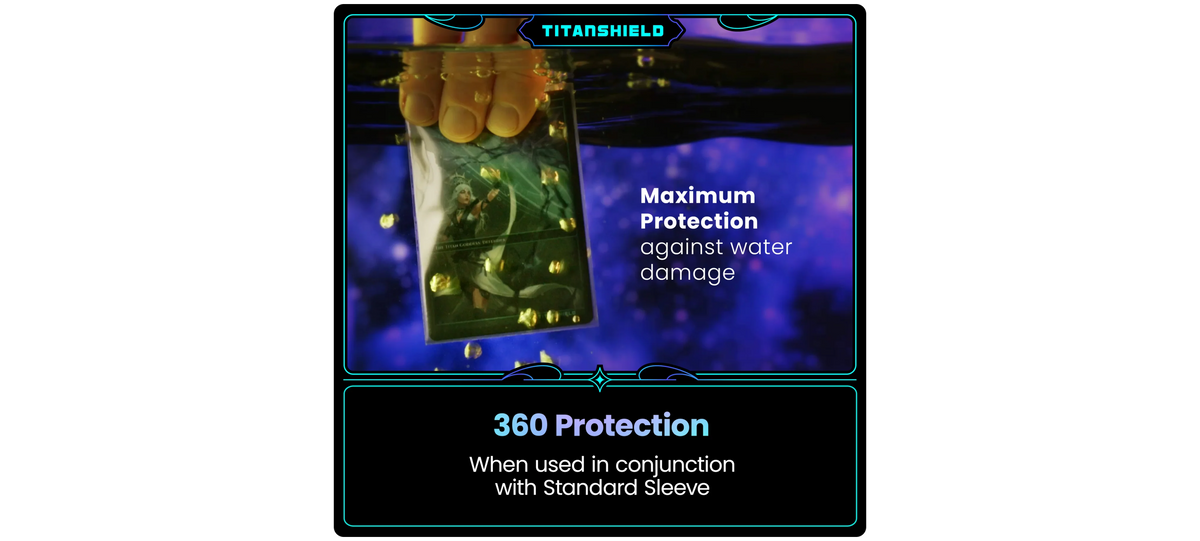
If you're ready to double-sleeve all the cards that matter, start with inners that fit inside your favorite outer sleeves without any fuss. TitanShield perfect-fit inner sleeves are cut for a consistent, snug fit and pair cleanly with TitanShield outer sleeves, giving you reliable protection without added bulk or frustration.
Choosing well-made inner sleeves means smoother double-sleeving, fewer sleeve failures, and dependable protection for cards that see regular play.
Upgrade your deck’s protection. Shop TitanShield inner sleeves today.
If you value condition or plan to sell or grade, yes, double-sleeving with an inner sleeve is the safer route. For casual kitchen-table games, outer sleeves alone can be fine, but the benefit of inner sleeves shows up over months of shuffling and handling.
For Magic: The Gathering, absolutely. MTG cards see a lot of play, and the format encourages shuffling. Inner sleeves reduce surface scratches and edge wear, and they help high-value staples keep their value.
Yes. Pros use high-quality outer sleeves for play and often double-sleeve key cards or full decks, especially in tournaments. The inner sleeve adds security without making the deck feel thick or awkward.
“Best” depends on how you like your cards to feel and shuffle. TitanShield offers durable inner sleeves and matte outer sleeves designed for smooth handling and consistent protection. If you're trying a new setup, start with a single pack to make sure the fit and shuffle feel match your deck box and play style.
Perfect-fit sleeves are the inner layer — thin, tight, and designed specifically to fit inside an outer sleeve. Regular sleeves (outers) are thicker, usually with a colored or matte back, and made for shuffling during play.
Yes, just choose the small/Japanese size (about 59 x 86 mm) so they fit properly. Then pair them with small-size outer sleeves. A standard-size inner sleeve will be too loose for Yu-Gi-Oh! cards.
They should slide on smoothly with a snug fit, no buckling or forcing. Inside the outer sleeve, the card should sit flat and not stick when you shuffle. Check the size listed for your game and the type of outer sleeve you plan to pair it with. If the card feels tight or the sleeves bunch, try a different cut or a different load style.
Join TitanShield's Rewards Program:
Track your rewards easily and redeem them whenever you're ready. Earn 100 points for signing up.