What Fits Standard Size Card Sleeves?
|









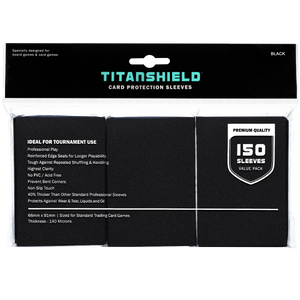


Tossing a deck into “standard” sleeves only to run into fit issues is a frustrating waste of time and money.
Standard size card sleeves are dimension-based, not game-specific, but the term “standard” is reused across multiple size systems. Sleeve manufacturers use labels like “standard,” “standard American,” and “standard European” for different board game card dimensions, while “poker size” typically refers to the 63 × 88 mm (2.5" × 3.5") format used by most trading card games (TCGs).
In this guide, you’ll get exact measurements, a compatibility list across popular games, and how to confirm sizing before you add sleeves to your cart. We’ll also clear up common confusion around 3×4 sleeves and PSA sleeves so you can choose the right sleeves the first time.
The industry baseline for a "standard card" is 63 × 88 mm. That covers most major TCGs and a huge number of board and party games that use poker size cards.
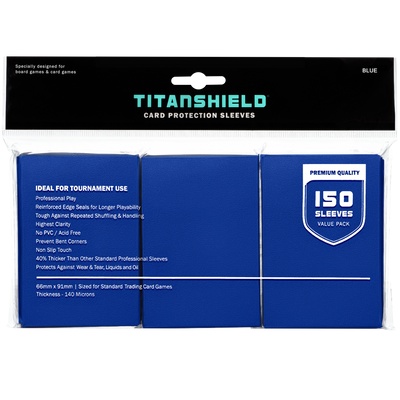
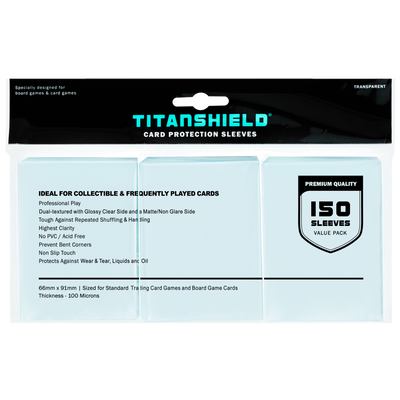
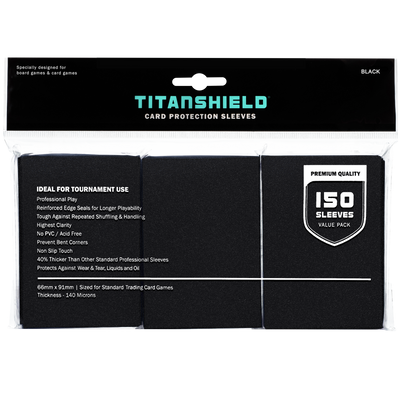
Standard size card sleeves are typically about 66 × 91 mm (2.6" × 3.6"). That ~3 mm margin in each direction isn't an accident. The extra room:
If you've ever tried to cram a 63 × 88 mm card into a sleeve that's also 63 × 88 mm, you know it's a recipe for split seams and bent corners. Aim for that 2–3 mm buffer.
These terms are often used interchangeably, but they refer to different card size categories and are not the same.
If a product page says "poker size sleeves," that usually means sleeves made for 63 × 88 mm cards, i.e., your standard TCGs. But when you see "Standard American" or "Standard European," that's board-game sizing and is not the same as standard TCG sleeves.
If you’re sleeving a mainstream trading card game, there’s a good chance it uses standard size sleeves. The following games all use the same card footprint and sleeve format:
Competitive players often prefer matte-backed sleeves for glare control and better shuffle feel, while collectors who want maximum clarity go with premium clear sleeves. Either way, stick with standard size for the titles above. Do note that occasional special promos or oversized cards won't fit standard sleeves. If you're unsure, check the set notes.
Reminder: Some Japanese TCGs, most notably Yu‑Gi‑Oh! and Cardfight!! Vanguard, use smaller cards and do not fit standard size sleeves. You’ll need Japanese-size card sleeves instead.
Lots of non-TCG games use poker size cards and therefore fit standard size sleeves, including party and social deduction games.
Common examples include Cards Against Humanity and the base version of Coup. However, many games, such as Secret Hitler, certain Coup expansions, and Kickstarter or indie titles, use custom or mixed card sizes within the same box.
For board games, always verify card sizes on the publisher’s page or on BoardGameGeek before ordering sleeves, since mixed-size decks are common.
Yes, but with important limitations. Penny sleeves are designed for storage, not gameplay.
Most penny sleeves measure about 2.5" × 3.5" (63 × 88 mm), which means Pokémon cards will fit inside them. However, penny sleeves are looser and thinner than standard deck sleeves. They’re made to accommodate a wide range of trading cards, including thicker sports cards, which is why they don’t offer a snug, shuffle-safe fit.
Penny sleeves are best used for:
They’re not recommended for gameplay, as cards will slide around, bend more easily, and collect dust.
The 3×4 size usually refers to toploaders, not standard soft sleeves. A 3" × 4" toploader measures roughly 76 × 102 mm and is designed to hold a penny-sleeved card for added rigidity and protection.
Toploaders are commonly used for:
Because of their size and rigidity, 3×4 toploaders are not shuffle-safe and are not intended for decks or binders.
For gameplay, standard size card sleeves are the correct choice for Pokémon cards because they offer:
Bottom line: Penny sleeves are designed for storage and handling, and 3×4 toploaders are meant for storage, shipping, and grading prep. For gameplay and binders, standard size sleeves provide the correct fit. When playing or organizing Pokémon cards, standard size sleeves are the best option.
PSA sleeves are designed to protect graded slabs, not raw cards. PSA stands for Professional Sports Authenticator, a leading card grading company that seals cards inside hard plastic cases after grading.
PSA sleeves are sized to fit the outer dimensions of those graded slabs, not standard 63 × 88 mm trading cards. As a result, they’re much larger than standard card sleeves and are meant to slide over the slab to provide a clean, dust-resistant layer for storage, display, or shipping.
| Feature | PSA sleeves | Standard card sleeves |
|---|---|---|
| Purpose | Protect graded slabs | Protect raw trading cards |
| What they fit | PSA-graded slabs (hard plastic cases) | 63 × 88 mm (2.5" × 3.5") cards |
| Dimensions | Sized to the slab’s outer measurements | Slightly larger than the card for a safe fit |
| Primary use | Storage, display, and shipping | Gameplay, deck building, binders |
| Shuffle-safe | No | Yes |
| Binder compatibility | Not compatible with standard nine-pocket pages | Designed to fit standard binder pages |
| Fit during play | Too large and loose | Snug and consistent |
Use PSA sleeves when your card is already graded and in a PSA case. Use standard card sleeves (and if needed, inner "perfect fit" sleeves) for raw cards used in gameplay, binders, or top-loader storage before grading.
Here’s a quick checklist to review before buying sleeves:
If your card isn’t 63 × 88 mm and close to standard trading-card thickness, a standard size sleeve may not be the right fit.
Follow these steps:
Pro tip: Hold a standard playing card next to your TCG card. If they share the same footprint and similar thickness, standard size card sleeves should fit.
If you prefer a snug fit and added protection, consider double sleeving. Use inner “perfect fit” sleeves designed for 63 × 88 mm cards, then place them inside standard outer sleeves for extra protection and a smoother shuffle.
Here’s the takeaway you can trust: standard cards measure 63 × 88 mm, and the right standard card sleeve is roughly 66 × 91 mm to allow a clean, snug fit. That small difference in sleeve size helps protect edges, improves durability, and keeps your deck shuffle-ready.
Before you buy, confirm measurements rather than relying only on the word “standard.” If your game uses poker size cards, you’re set. If it’s labeled "Standard American" or "Standard European," that indicates a different sleeve family.
If you want extra protection and longer card life, double sleeving offers great value. Pair an inner perfect-fit sleeve with a matte or clear outer sleeve for better control, clarity, and longevity.
TitanShield offers standard size card sleeves in popular finishes: matte for gameplay control and premium clear for showcase clarity, along with perfect-fit inners for smooth double sleeving.
If you have questions or want help confirming fit, our customer support team is happy to help.
Yes, functionally, they are. Poker size refers to 63 × 88 mm playing cards, which is the same footprint as standard TCG cards. So poker-size sleeves and standard size TCG sleeves are designed for the same card dimensions.
Just be sure to confirm the sleeve's inner dimensions, which should be around 66 × 91 mm to ensure a proper fit.
Not at all. Thickness, film material, texture, and finish vary by brand and product line. Matte sleeves reduce glare and improve grip for shuffling, while clear sleeves maximize clarity and color pop. Thicker sleeves generally boost durability and protect against edge wear but add a bit of weight.
TitanShield standard size sleeves use a dual-textured design: a textured back (available in both color and clear) paired with a high-clarity, glossy front. This provides consistent shuffle control while keeping the card face sharp and easy to read.
Absolutely. The common setup is an inner perfect fit sleeve designed for 63 × 88 mm cards, inserted top-first into a standard size outer sleeve (~66 × 91 mm). This combo adds extra protection against dust and moisture, helps prevent corner dings, and extends the lifespan of heavily played decks.
If you're building a tournament deck or preserving a prized collection, double sleeving is a smart upgrade.
Join TitanShield's Rewards Program:
Track your rewards easily and redeem them whenever you're ready. Earn 100 points for signing up.