Regular vs. Top Loader Card Sleeves: A Practical Card Protection Guide
|







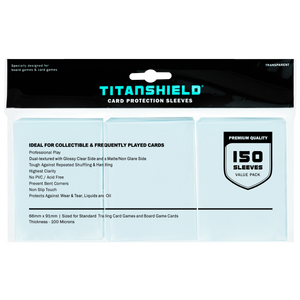


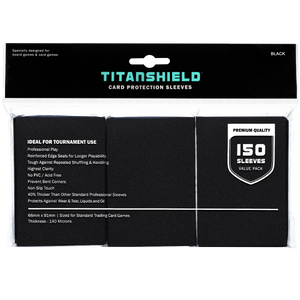


If you've ever watched a $5 card turn into a $50 card after a breakout performance or a grading bump, you know how fast value (and risk) can change.
Handling, tight storage, and transport can scuff surfaces, flatten corners, or bend edges. So here's the question: when do regular sleeves stop being enough and top loader card sleeves become the smarter play?
This guide gives you the practical answer, with clear use cases for trading cards, sports cards, and everything in between.
Regular card sleeves (often called penny sleeves or soft sleeves) are thin, flexible polypropylene (PP) sleeves designed for basic, everyday protection. They're the most affordable option for sleeving cards you play with, store in binders, or keep in bulk.
In short, regular sleeves are perfect for cards you play or flip through often. They're clear, clean, and compatible with binders, deck boxes, and standard size card storage. But if you're protecting a card where a single corner ding hurts value, you'll want more than a soft sleeve.
A top loader card sleeve, often just called a top loader or toploader, is a rigid or semi-rigid plastic holder that you load from the top. The rigidity provides protection against bending, pressure, and corner damage.
Think of top loaders as the go-to for cards you don't want to risk during transport, shows, grading, or long-term card storage.
Top loaders provide protection against:
What they're not for:
If you need protection without sacrificing playability, regular sleeves (and sometimes double sleeving) remain your best bet.
If you’re deciding between the two, this breakdown makes the tradeoffs clear:
| Feature | Regular soft sleeves | Top loaders |
|---|---|---|
| Flexibility | Very flexible; suited for shuffling and binders | Rigid or semi-rigid; not suitable for play |
| Level of protection | Surface-level protection against scratches and oils | Protection against bending, pressure, and corner damage |
| Thickness | Ultra-thin; adds minimal bulk | Significantly thicker; fewer cards fit per box or row |
| Storage compatibility | Compatible with deck boxes, binders, and standard card storage | Better for display, shows, shipping, and select storage; requires boxes designed for top loaders |
| Typical use cases | TCG decks, casual collections, binders, bulk cards | Grading prep, thicker cards, vintage cards, shipping, high-value sports cards |
The right card protection depends less on the card itself and more on how it’s handled. The table below breaks down where each option makes the most sense.
| Situation | Regular sleeves | Top loaders |
|---|---|---|
| Playing TCG decks | ✓ Built for shuffling and consistent fit | ✕ Too rigid for play |
| Board game cards | ✓ Protects cards without changing feel | ✕ Not practical for repeated handling |
| Binder storage | ✓ Fits standard binder pages | ✕ Too thick for binders |
| Bulk card storage | ✓ Space-efficient and low cost | ✕ Takes up unnecessary space |
| Casual collecting or sorting | ✓ Easy to flip through and organize | ✕ Overkill for casual handling |
| High-value individual cards | ✕ Limited protection | ✓ Adds rigidity against damage |
| Thick cards (autos, relics, patches) | ✕ Often too flexible | ✓ Available in multiple thicknesses |
| Vintage or fragile cards | ✕ Higher risk of bends | ✓ Reduces handling stress |
| Shipping cards | ✕ Not enough protection alone | ✓ Helps prevent bends and corner damage |
| Grading prep or display | ✕ Not typically used | ✓ Common choice for transport and display |
Sports cards get handled differently than most collectibles. They're pulled out for shows, shipped to buyers, and sent off for grading. That constant movement is why top loaders have become the default protection method.
Many football, baseball, and basketball cards (especially autographs, relics, and RPAs) are thicker than standard trading cards. Sport card sleeves and top loaders are available in sizes like 35pt, 55pt, 75pt, 100pt, 130pt, and beyond to match that added thickness without stressing corners.
Sports cards are frequently bought, sold, and graded. Rigid sports card sleeves help protect cards during price checks, show-and-tell, and transactions where condition matters.
Cards move from cases to tables to buyers’ hands. Top loaders help guard edges and corners as cards are picked up and inspected.
Semi-rigid holders are often preferred for submissions to PSA (Professional Sports Authenticator) and BGS (Beckett Grading Services), with top loaders commonly used for transport, post-grading storage, display, and shipping.
From vintage stars to modern pop-culture inserts, collectors apply the same protection approach to any sports-related card with age, scarcity, or resale value.
TitanShield's sports trading card sleeves build on that same protection-first approach, offering premium sports card sleeves (68×92 mm) with a precise fit and noticeable weight. Made from crystal-clear, acid-free, PVC-free materials, they’re designed for binder-ready, archival-grade storage for baseball, basketball, hockey, and more.
Using a top loader properly matters as much as choosing the right one. Small handling mistakes can cause surface scratches or corner damage, even inside a rigid holder.
Top loaders offer strong protection, but only when they’re used correctly. These are the most common mistakes that lead to avoidable card damage.
Use regular sleeves for cards you play, sort, and handle often: TCG decks, casual sets, binders, and large collections. Step up to top loaders when a card’s value, rarity, or purpose (shows, shipping, or grading) raises the stakes. Regular soft sleeves protect the cards you can replace, while top loaders protect the ones where damage means real loss.
If you’re building out protection, start with a pack of clear penny sleeves and a mix of standard-size and thicker top loaders. It’s a simple setup that saves time, protects value, and keeps your collection organized as it grows.
When you’re ready to buy, explore TitanShield’s top loaders and card sleeves, designed to fit cleanly and protect corners. If you have questions about sizing, thickness, or storage, our customer service team is available to help you choose the right option so you can ship, store, and display with confidence.
No. Top loaders are rigid and bulky, so they don't flex for shuffling. Use regular card sleeves (or double-sleeve) for deck play.
They significantly reduce bending and corner damage, and they help against pressure and drops. But no product is perfect. Extreme force, moisture, or grit inside a sleeve can still cause damage.
Sleeve it first, always. A penny sleeve adds a clean barrier and reduces friction on insertion and removal.
Use boxes designed for toploaders or team bags within a larger storage solution. Standard card storage boxes fit sleeved cards and semi-rigids better than thick rigid toploaders.
Match the loader to the card thickness:
When in doubt, test with a spare loader. The card should slide without forcing and shouldn't rattle.
Top loaders are made from rigid PVC, while penny sleeves are made from polypropylene (a non-PVC, archival-safe material). The standard practice is to use a polypropylene penny sleeve as a protective barrier between your card and the PVC top loader. This combination provides excellent protection for typical collector use.
For museum-level archival storage or extremely valuable vintage cards, some collectors prefer entirely PVC-free solutions and climate-controlled environments. However, for the vast majority of collectors, penny sleeve + top loader is a proven, reliable method that provides both physical protection and long-term preservation.
You can, but it's a risk. For high-value cards, autographs, vintage, or low-numbered sports cards, step up to top loaders or semi-rigid holders, especially for transport or grading. It's inexpensive protection that preserves value.
TitanShield offers sport-specific sleeves (68x92 mm) sized correctly for sports cards, plus top loaders for maximum protection.
Join TitanShield's Rewards Program:
Track your rewards easily and redeem them whenever you're ready. Earn 100 points for signing up.