MTG Players: These Sleeves Could Change Your Game
|











Playing Magic long enough teaches you an annoying truth: your deck can be perfect, but your sleeves can still sabotage you.
A "grabby" shuffle slows down your turns. A split seam mid-match forces an emergency resleeve. Slightly inconsistent cuts make a deck feel lumpy, and that's not just aesthetics. It can affect shuffle consistency and how quickly corners start to wear.
The gap between casual kitchen-table play and tournament handling is mostly physical. More shuffles, more pile cuts, more deck checks, more time under pressure. That's why choosing the right MTG card sleeves comes down to matching your sleeves to your format, your shuffle habits, and how hard you are on a Magic deck.
This guide breaks down MTG card size basics, what different formats demand, how "shuffle feel" actually works, and what to look for when you want sleeves that protect your MTG cards without making shuffling a hassle.
Magic cards are considered standard card size, but "standard" gets messy in the real world What Fits Standard Size Card Sleeves. Your cards are consistent enough that any sleeve marketed as Magic: The Gathering card sleeves will generally fit, but the difference between "generally" and "clean, consistent fit" is where players get frustrated.
Official MTG card dimensions are roughly 63x88 mm (about 2.5" x 3.5"). Most Magic card sleeves are made slightly larger than that on purpose. You want a little extra room so the card slides in without catching corners and so the sleeve can fully cover the edges.
Sleeves need clearance for:
That extra space is good, until it's too much. Oversized MTG sleeves can trap air, feel puffy, and make your deck taller and less stable.
Most sleeve issues aren't obvious at first. They're slow-burn problems you notice after a few games.
If you care about your collection, whether you're a player, collector, or investor, fit is the first layer of protection. Bad fit makes everything harder, including shuffling, storing, and long-term wear.
Different formats mean different levels of wear. The more you shuffle, cut, and handle your deck (or the longer the event day), the more you should prioritize durability and consistent manufacturing.
The key is setting realistic expectations. Even great sleeves are consumables. Your goal is to buy sleeves that age predictably, don't split early, and keep a consistent shuffle feel.
Commander demands more from your sleeves than any other format.
If you've ever watched a Commander table, you know the rhythm: tutor, shuffle, crack a fetch, shuffle again, present, cut, repeat. Your sleeves need to survive that.
Competitive constructed formats demand fast play and close scrutiny.
In competitive play, you want sleeves that feel consistent from round one to round five. No sudden tackiness, no edges whitening after a single day.
Limited is sneaky. You might only need sleeves for a day, but that day can be long.
Limited also exposes one more truth: when you're tired, you shuffle harder and less carefully. That's when weak seams show up.
| MTG format | Shuffle volume | Handling stress | What matters most in sleeves |
|---|---|---|---|
| Commander (EDH) | Very high | Constant handling over long games | Consistent cut, strong seams, smooth glide for tall stacks |
| Standard / Pioneer / Modern | High | Repeated shuffling, opponent handling, deck checks | Predictable shuffle feel, good opacity, sleeves that wear evenly |
| Limited (Draft and Sealed) | Moderate to high | Fast, sometimes careless handling during long days | Seam strength, basic durability, sleeves that don’t split mid-event |
Players talk about sleeves the way car people talk about tires. You don't notice them until they're wrong. Shuffle feel usually comes down to two traits, glide and grip, and most sleeves live somewhere on that spectrum.
There's no universal best here. It's about control.
Two design details that affect glide and grip:
Texture can be great, until it becomes friction. Overly aggressive "brushed" or heavily textured backs can make mash shuffling feel like sandpaper. That slows the game, especially in formats with frequent shuffles.
Personal preference varies, but a few handling traits consistently improve gameplay:
If you're picky about shuffle feel (many collectors and competitive players are), prioritize consistent manufacturing over flashy art sleeves that look nice but handle inconsistently.
Durability is where sleeve marketing gets loud. But in real life, a few specific failure points decide whether your card sleeves MTG last months or collapse in a weekend.
Split seams usually come from:
If you've ever had a sleeve split during a game, you know why this matters: it can create a marked card problem, not just frustration.
Corners and edges take the most abuse. Watch for:
A sleeve that holds its corners well keeps your Magic cards looking sharp and helps your deck stay uniform.
Thicker sleeves generally resist bending better and can feel more stable, especially for Commander stacks. But thickness alone doesn’t guarantee a good shuffle feel.
This is the part players don't talk about enough. "Good sleeves" aren't only about the label; they're also about whether the pack you open has:
That consistency is what keeps your deck feeling the same from game to game. And it's what helps you avoid the worst experience: buying sleeves, liking them, then discovering the next pack feels different.
If you collect higher-end cards or rotate decks often, this decision matters more than people admit. Single-sleeving is simpler. Double sleeving is an extra step, but it can be the difference between "minor wear" and "stays near-mint."
Single-sleeving works well when:
For many players, a quality outer sleeve is enough protection for regular weekly play.
Double sleeving is especially smart when:
An inner sleeve (often called a perfect fit) plus an outer sleeve helps block dust and moisture and reduces scuffing.

Double-sleeving makes each card thicker, which:
But it can also make a deck box fit tighter, so check your storage before you sleeve 100 cards and realize the lid won't close.
Done right, double-sleeving is one of the best "invest once, replace less often" moves in the hobby.
Sleeve color looks like a style choice until you play sanctioned events or start worrying about marked cards. Opacity is the quiet deal breaker.
Darker colors (black, deep blue, etc.) tend to hide card backs better and reduce the chance of transparency issues. If you're playing competitively, this is the safest path.
Light colors can look vibrant and clean, but they're often more see-through, which means card backs might be visible through the sleeve, especially double-faced cards or worn card backs. This can unintentionally let you identify specific cards in your deck, something that's not allowed in competitive play.
Clear sleeves can be a good fit when:
But for a shuffled deck, especially in tournaments, clear sleeves can be risky if card backs vary in condition.
If your goal is maximum peace of mind, choose a sleeve color and finish that keeps the deck uniform and hides anything that could be considered a mark during a deck check.
There isn’t a single “best” MTG sleeve for everyone. Your format, play frequency, and shuffle style should drive the decision.
If you maintain one "forever" deck, it's worth buying sleeves you trust and sticking with them so replacements match.
If you rotate multiple decks (say, switching between Commander, Standard, and Draft decks), you might standardize your sleeve choice across the whole collection. That way, you can easily swap cards between decks and don't need to track down specific sleeve types for each one.
Sleeves don't wear out only at the table. They wear out in:
Also, a sleeve that feels great at home may feel different under bright store lighting or after hours of play. If you've ever thought, "These felt nice yesterday. What happened?" that's normal.
And there's a real tension you should acknowledge upfront: some players chase that buttery glide above all else, while others want maximum lifespan and don't mind a slightly more controlled grip. Neither is wrong. The trick is choosing intentionally, not accidentally.
| Scenario | What to prioritize | Why it matters |
|---|---|---|
| Casual play | Comfort, visual appeal, enjoyable shuffle feel | Sleeves don’t face constant scrutiny, so you can prioritize feel and design over maximum durability |
| Competitive play | Consistency, strong opacity, stable shuffle feel | Long events and deck checks demand sleeves that wear evenly and don’t risk marked cards |
| One long-term deck | Reliable model you can easily replace | Matching replacements keep the deck uniform and avoid uneven wear |
| Multiple rotating decks | Standardizing one sleeve type | Makes card swapping easier and avoids hunting down different sleeve models |
| Frequent travel / events | Edge durability, resistance to pressure and friction | Sleeves wear out in deck boxes and backpacks as much as at the table |
| Glide-focused players | Smooth surface, controlled slide | Faster shuffling, especially in tall Commander stacks |
| Longevity-focused players | Strong seams, structured feel | Better resistance to edge wear and gradual tackiness |
If you want sleeves that hold up well, focus on a few concrete markers of quality.
A reliable sleeve pack should feel uniform:
Consistency is what makes a deck shuffle predictably and prevents weird wear patterns.
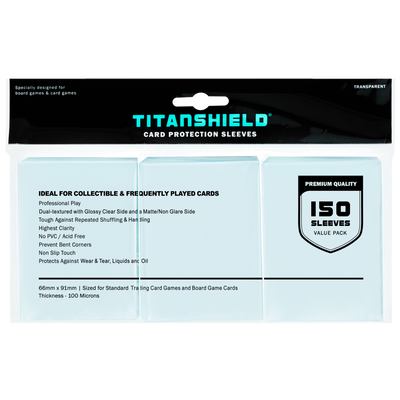
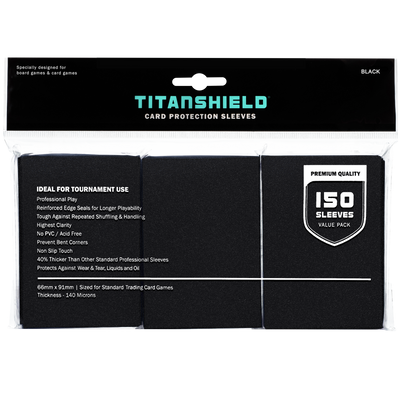
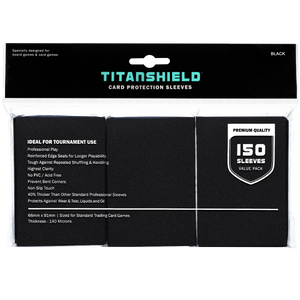
Sleeves around 100 microns are often cited as a sweet spot for balancing structure with shuffle feel, but TitanShield's colored sleeves actually push beyond that baseline at 140 microns, with only our clear version landing at 100. That extra thickness gives the colored options a more substantial feel and greater durability.
Some sleeves feel different depending on dye, finish, or batch. If you have multiple decks and like using different colors for each one, look for a brand that feels consistent across their whole color range, whether you go with classic blacks or bright metallics.
This sounds obvious, but it saves you from "almost fits" purchases, especially if you're tempted by random marketplace listings. When you check product specs (whether you buy on Amazon or direct), make sure you're getting sleeves sized for standard MTG cards (roughly 66x91 mm).
If you want to browse sleeves designed specifically for Magic card dimensions, you can browse our collection here: TitanShield sleeves compatible with Magic: The Gathering.
Good sleeves mean less resleeving, fewer splits mid-game, and a deck that shuffles consistently every time you sit down to play.
Sleeves are part of your deck's performance, whether you admit it or not. The right MTG card sleeves match your format, your shuffle habits, and how often you play. The wrong ones turn into little problems that stack up: slow shuffles, split seams, bent corners, visible wear, and the occasional "Do I need to replace these right now?" panic.
If you want a smart rule to live by, optimize for consistency and durability over hype. A great sleeve isn't the one everyone talks about; it's the one you stop thinking about because it just works.
Invest once, replace less often, and spend your time on the parts of Magic that actually matter: your strategy, your gameplay, and your next draw step.
Magic cards are roughly 63x88 mm, commonly called standard size. Look for sleeves labeled for standard size TCGs or specifically for Magic: The Gathering.
No. Even when sleeves are marketed as standard size, cut consistency, corner shape, thickness, and finish can vary by brand and sometimes by batch or color.
Not automatically. Thicker sleeves can feel more structured and durable, which many players like, especially for Commander. Shuffle feel depends on thickness and surface finish (matte vs. glossy) and how consistent the sleeves are.
Price helps sometimes, but it's not a guarantee. What matters most is consistent manufacturing, solid seams, good opacity, and a shuffle feel you like. Some mid-priced sleeves outperform pricier options depending on your needs.
Replace sleeves when you notice splits, corner deformation, edge whitening that makes the deck look uneven, changes in shuffle feel, or any signs of marked cards.
Heavy-play decks may need new sleeves every few months. Lightly played ones can last much longer, especially if you store them well and avoid mixing old and new sleeves in the same deck.
Join TitanShield's Rewards Program:
Track your rewards easily and redeem them whenever you're ready. Earn 100 points for signing up.